
(Leviticus 9)
(A message given at Fullness Christian Fellowship, June 23, 2024)
Introduction
I would like to think with you this morning about God (and us) but mostly about God. Every time we think about Him, “our heads hit the ceiling” (as Francis Schaeffer used to say). For instance, how do we explain that:

- God exists as a trinity—Father, Son, and Holy Spirit—three persons, yet one essence?
- Jesus is fully God and fully human? Was He fully God in the womb? If so, how is it that He develop as a child?
- God is sovereign, and yet we have free will?
- God is everywhere present, yet physically located in the person of Jesus?
Any attempt to answer these questions causes “our heads to hit the ceiling.” It’s not that God is illogical; He’s not; but He is supra-logical.
I find the idea of a mirror helpful in understanding why “our heads hit the ceiling.” Let’s say you’re looking into a mirror, and you see me. (Sorry). In any case:

You lift your hands over your head, and I do this.
You lift your hands out from your side, and I do this. So far, it’s not a problem.
But then, you point at me.
As a mirror, I only have two dimensions. I understand vertical movement and horizontal movement, but I cannot explain movement in a third dimension. Nevertheless, I also cannot deny what I see you doing. It’s not illogical, but supra-logical from my two-dimensional world.
I think that is what it’s like when we’re thinking about God—“Our heads hit the ceiling.”
Transition to Message
Another one of these categories about God is that He is transcendent—completely beyond us, “other” than us, alien to us, and yet He is also immanent—present with us—a “close encounter of the third kind.” How can a God who is “other” than us ever be “with” us?
We receive glimpses of God’s “otherness” (His austere, terrifying holiness) when He first appears to Israel on Mount Sinai:

18 Now Mount Sinai was all in smoke because the Lord descended upon it in fire; and its smoke ascended like the smoke of a furnace, and the whole mountain quaked violently.
19 When the sound of the trumpet grew louder and louder, Moses spoke and God answered him with thunder.
20 The Lord came down on Mount Sinai, to the top of the mountain; and the Lord called Moses to the top of the mountain, and Moses went up.
21 Then the Lord spoke to Moses, “Go down, warn the people, so that they do not break through to the Lord to gaze, and many of them perish.
22 “Also let the priests who come near to the Lord consecrate themselves, or else the Lord will break out against them.”
Exod 19:18-22
Then when Moses was on Mount Sinai, he said:
18 “I pray You, show me Your glory!”
19 And He said, “I Myself will make all My goodness pass before you, and will proclaim the name of the Lord before you; …”
20 But He said, “You cannot see My face, for no man can see Me and live!”
21 Then the Lord said, “Behold, there is a place by Me, and you shall stand there on the rock;
22 and it will come about, while My glory is passing by, that I will put you in the cleft of the rock and cover you with My hand until I have passed by.
23 Then I will take My hand away and you shall see My back, but My face shall not be seen.”
Exod 33:18-23
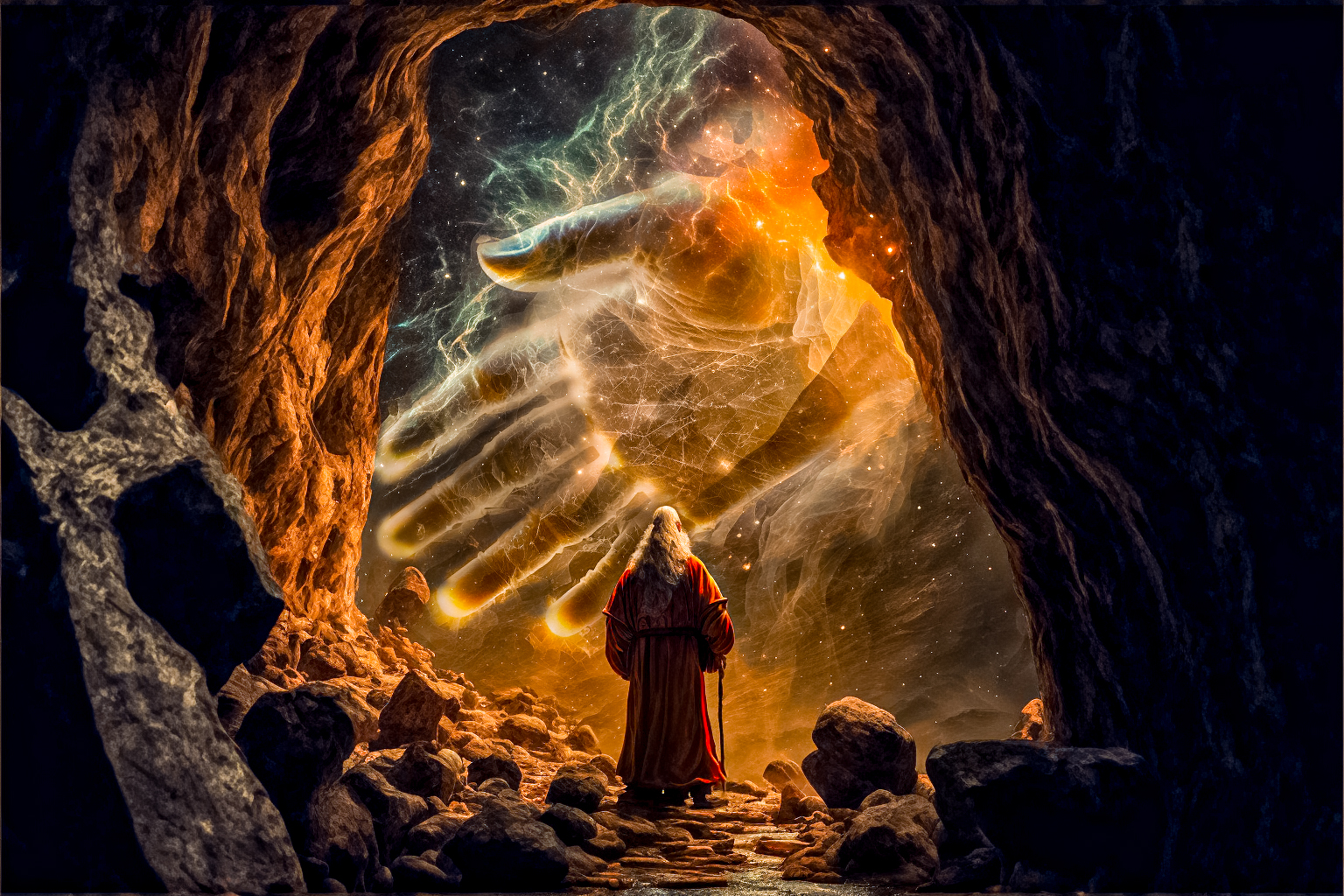
Even for Moses, there was something about the “otherness” of God that could not be seen.
Then when the tabernacle was completed, we are given this report:
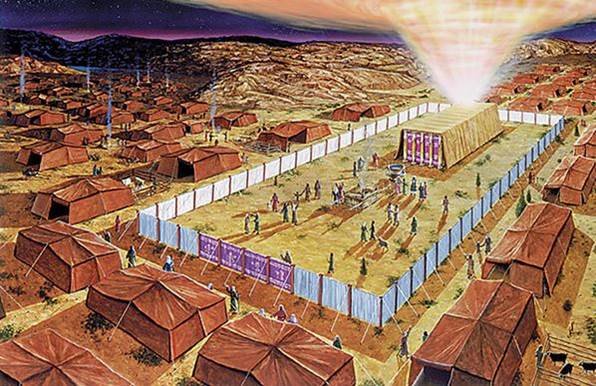
Then the cloud covered the tent of meeting, and the glory of the Lord filled the tabernacle.
Moses was not able to enter the tent of meeting because the cloud had settled on it, and the glory of the Lord filled the tabernacle.
Exod 40:34-35
Message
The Sacrifices in Leviticus 9
This brings us to this morning’s Scripture passage in Leviticus 9. It’s been just over a month since the glory of the Lord entered the tabernacle. Sacrifices have been explained (Lev. 1-7), the priesthood has been ordained (Lev. 8), and now the inauguration of the first worship service is described. What is of interest is the repeated statement that the YHWH is going to appear to them. How would you feel about that?
1 Now it came about on the eighth day that Moses called Aaron and his sons and the elders of Israel;
2 and he said to Aaron, “Take for yourself a calf of a bull, for a sin offering and a ram for a burnt offering, both without defect, and offer them before the Lord.
3 “Then to the sons of Israel you shall speak, saying, ‘Take a male goat for a sin offering, and a calf and a lamb, both one year old, without defect, for a burnt offering,
4 and an ox and a ram for peace offerings, to sacrifice before the Lord, and a grain offering mixed with oil; for today the Lord will appear to you.’”
5 So they took what Moses had commanded to the front of the tent of meeting, and the whole congregation came near and stood before the Lord.
6. Moses said, “This is the thing which the Lord has commanded you to do, that the glory of the Lord may appear to you.”
A. Eighth Day. This takes place on the “eighth day” following the seven days of consecration of the priests in chapter 8. The eighth day signifies that this is the beginning of something new:
- Humanity’s involvement in the world occurred on the eighth day after the seven days of creation;
- A male child was circumcised on the eighth day to signify the beginning of his new life;
- Jesus rose from the dead on the eighth day;
This is now the beginning of the functioning of the tabernacle where the people met with God.
B. For Priests and the People. Sacrifices are offered, first for the priests, and then for the people.
- For the priests:
- a sin offering (atonement); and
- a burnt offering (dedication).
- For the people:
- a sin offering (atonement);
- a burnt offering (dedication);
- a peace offering (peace), and
- a grain offering (fellowship).
There is also a change in the order of mediators that has occurred. Before this day it was YHWH through Moses to the People. Now it is YHWH through Moses, through Aaron, through Aaron’s sons, to the people. The congregation is more removed from this “other” God.
C. The Blood. When you read the rest of the chapter, it’s very bloody. It makes us uncomfortable, and maybe it should. I realize that some of this may have been more familiar to the Israelites at Sinai because they lived in an agricultural society. But it’s not just the slaughter of animals, it’s the:
- sprinkling of the blood on the altar;
- placing of blood on the horns of the alter; and
- pouring out of the blood at the base of the alter.
I don’t know—I haven’t read this anywhere—but because of the substitutionary nature of the sin sacrifices, it seems like if this blood was not spilled, the tabernacle would be filled with the people’s blood—everyone would be destroyed before the “otherness” of God. As it said in Exodus 19:21-22
21 Then the Lord spoke to Moses, “Go down, warn the people, so that they do not break through to the Lord to gaze, and many of them perish.
22 “Also let the priests who come near to the Lord consecrate themselves, or else the Lord will break out against them.”
Exod 19:21-22
For instance, the sin offering for Aaron seems to be specific to his earlier creation of a golden calf for worship.
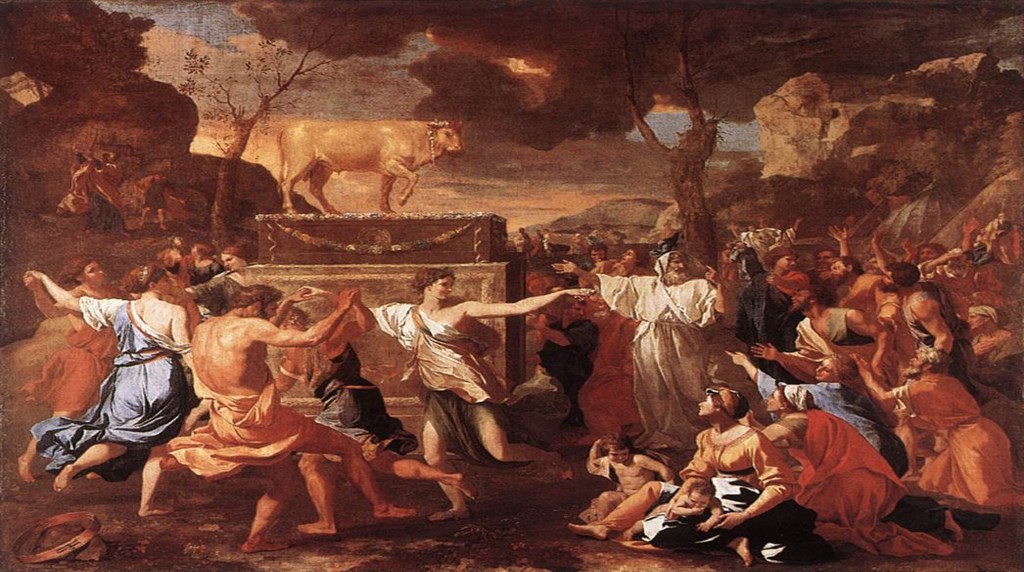
and he said to Aaron, “Take for yourself a calf of a bull, for a sin offering and a ram for a burnt offering, both without defect, and offer them before the Lord.
(Lev 9:2)
In Leviticus 4 the sin offering for the priest was to be a bull, but here it is the calf of a bull. It is a substitute for Aaron’s sin at the last “worship service’ for Israel.
D. The Ram: Also, the ram offering is an echo of Genesis 22 where Abraham was to sacrifice Isaac, but the Lord provided a ram in his place! Then in Genesis 22:14 Abraham makes this statement:
And Abraham called the name of that place The Lord Will See (yhwh yirʾê), as it is said to this day ‘in the mount of the Lord it will be seen (yērāʾê)”
Gen 22:14
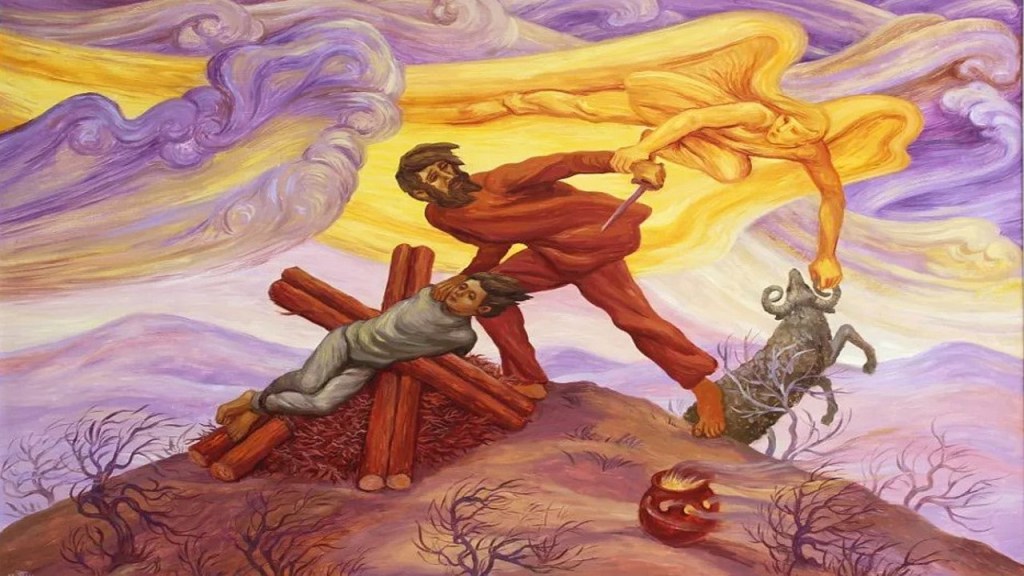
[Transition] The word for “see” is often translated as “provide,” but the sense is that God sees us in our service of Him, and then provides for our needs. This is the very word that is used three times in Leviticus 9 (vv. 4, 6, and 24). As they enter this service, God will see them, and they will then see God!
In fact, this is emphasized in the climax of Leviticus 9 after the sacrifices have been offered where it states:
Then Aaron lifted up his hands toward the people and blessed them, and he stepped down after making the sin offering, the burnt offering, and the peace offerings.
And Moses and Aaron went into the tent of meeting. When they came out and blessed the people, the glory of the LORD appeared to all the people.
Then fire went out from the LORD and consumed the burnt offering and the portions of fat on the altar; and when all the people saw it, they shouted and fell face downward.
Lev 9:22-24

Coming down from the alter, Aaron blesses the people. Then Moses and Aaron enter the Tent of Meeting. Even Moses couldn’t do this prior to the sacrifices. Now they both go in before the presence of the Lord and come back alive to bless the people, possibly with the text from Deuteronomy 6:23-27
‘The LORD bless you, and keep you;
The LORD make His face to shine upon you,
and be gracious to you;
The LORD lift His countenance upon you,
and give you peace.’
Num 6:23-26
Then the glory of the Lord appeared, and fire came from Him and quickly consumed the simmering offerings on the altar. This “other” God had come near to be with His people and show that He accepts their offering made in faith to what He commanded. God has seen their sacrifices and now provides for their needs by allowing them to see Him. The people responded by crying out (rnn) and falling on their faces to the ground.
This whole idea of God seeing us and providing for our needs is the other part of the equation of this transcendent God—He wants to, and does in fact, enter our world! “Okay,” you say, “I understand transcendence, but immanent at the same time? My head hits the ceiling!”
But he is constantly described this way in Scripture. For instance, in Psalm 113 the Psalmist says:
The LORD is high above all nations;
His glory is above the heavens.
Who is like the LORD our God,
Who is enthroned on high,
Who humbles Himself to behold
The things that are in heaven and in the earth?
He raises the poor from the dust
And lifts the needy from the ash heap.
Ps 113:4-7
This transcendent One wants to be close to us. When Solomon builds the temple, He again filled it with His Glory, and everyone fled.

But after so many years of rebellion by Israel, the time came when He had to leave because one aspect of His character cannot override another aspect of His character. He can’t only be immanent because, by nature, He is also transcendent.
[Illustration] Let’s think about this for a moment. Let’s say you have worked hard, saved your money, and then purchased tickets to a concert—say for Taylor Swift.
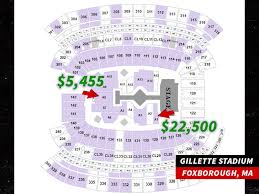
Then you get to the gate, and there’s a person in front of you speaking with an agent. You can overhear the conversation. They know the agent and are asking for a favor because they couldn’t afford to purchase the tickets. They’re asking the agent to just turn his head and let them pass by this one time. If he says, “Okay,” that’s a problem for you. You have worked hard and saved your money to attend this concert. So, to allow them to enter for free may be “nice” for them, but it no longer makes the ticket agent just or good. If he says “No,” to them, that will be hard, but he will at least be acting justly. Of course, if he said he had two extra tickets that he purchased, and gave the tickets to them, that would be both caring and just because the price of the tickets had been paid.
This dilemma is similar for God. He is transcendent, and “other” than us, so when His people, Israel, lived in rebellion against Him, He could not just turn His head because that would require Him to deny His “otherness.” So, He hesitantly, but necessarily, must depart from the temple.
Ezekiel describes it in this way using the image of a chariot comprised of wheels within a wheel and Cherubim who have multiple heads that look in all directions:
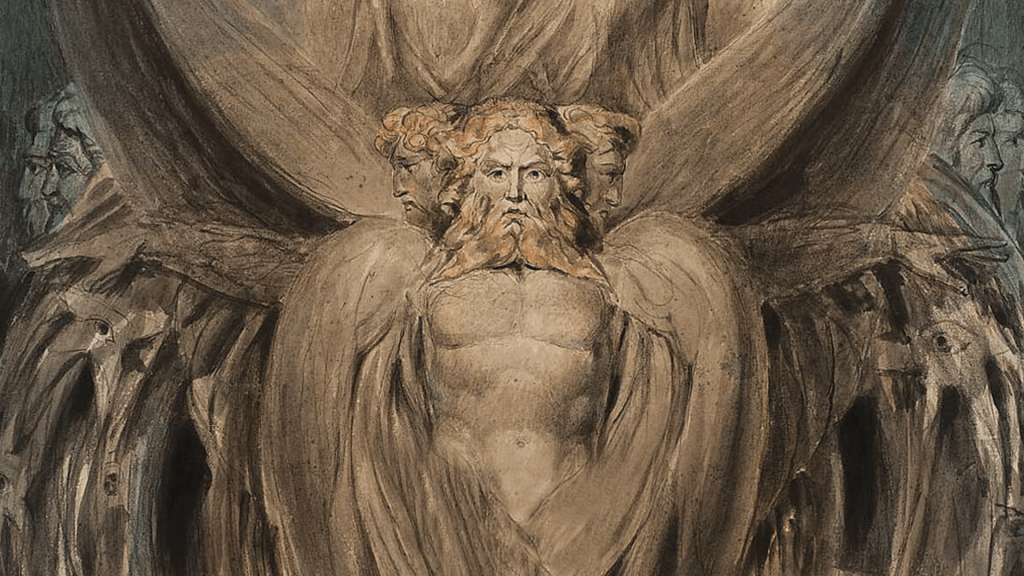
- Ezk 10:4-5. “Then the glory of the Lord went up from the cherub to the threshold of the temple, and the temple was filled with the cloud and the court was filled with the brightness of the glory of the Lord. Moreover, the sound of the wings of the cherubim was heard as far as the outer court, like the voice of God Almighty when He speaks.”
- Ezk 10:18-19: “Then the glory of the Lord departed from the threshold of the temple and stood over the cherubim. When the cherubim departed, they lifted their wings and rose up from the earth in my sight with the wheels beside them; and they stood still at the entrance of the east gate of the Lord’s house, and the glory of the God of Israel hovered over them.”
- Ezk 11:22-23: “Then the cherubim lifted up their wings with the wheels beside them, and the glory of the God of Israel hovered over them. The glory of the LORD went up from the midst of the city and stood over the mountain which is east of the city.”
It’s like YHWH is reticent, but who He is, requires that He depart, and the city falls to Babylon. After the captivity, Ezra rebuilt the temple, but the glory of God did not appear.
The Immanence of God.
But then approximately 400 years later we’re told in the Gospel of John.
“In the beginning was the word, and the word was with God and the word was God. . . .
And the word became flesh, and tabernacled among us, and we beheld His glory, glory as of the only begotten from the Father . . . .”
John 1:1, 14
You might say, “Well, that’s not the same glory we saw in the Old Testament.” To which I’d say, “Yes and no.” After Jesus performed his first miracle at the wedding in Cana, John tells us: “This was the beginning of the signs Jesus did in Cana of Galilee and manifested His glory.” John 2:11. So His works were a manifestation of His glory.
But there were other manifestations of his Glory. I think that the “star” that led the wisemen to Bethlehem was a manifestation of His glory.
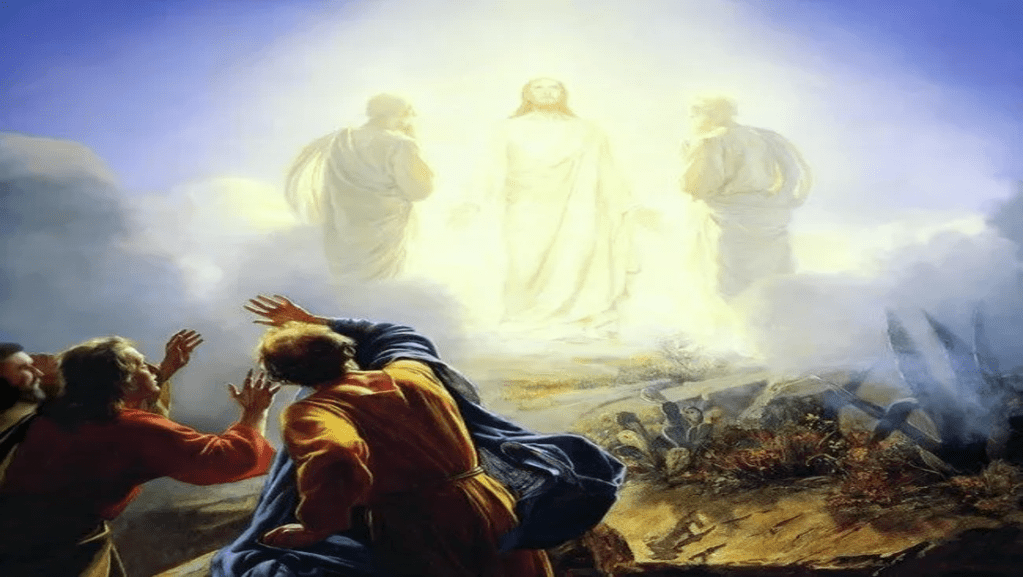
Jesus was seen in His Glory on the Mount of Transfiguration.
Also, Saul encountered God as a blinding light on the road to Damascus.
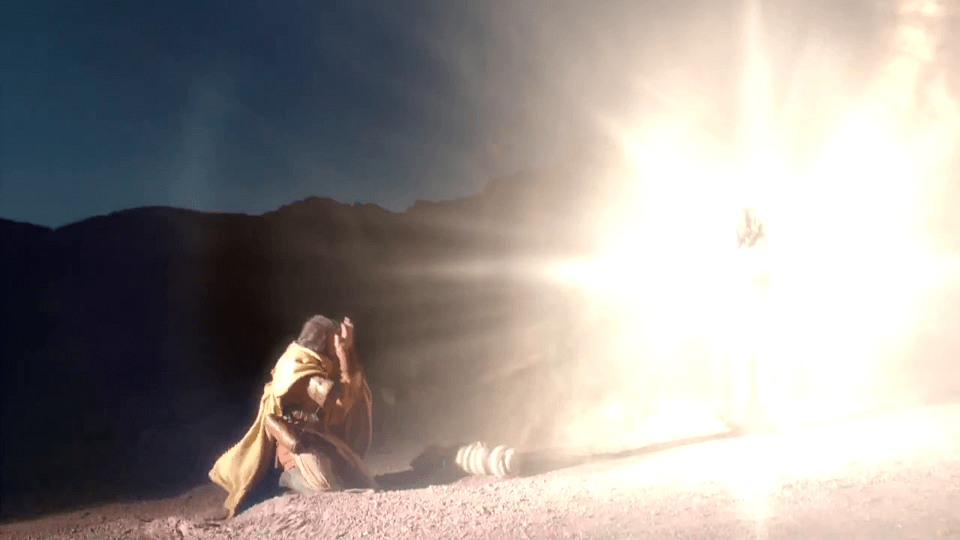
The night before He was crucified, Jesus prayed: “Now, Father, glorify me together with Yourself, with the glory which I had with you before the world was.” John 17:5.
As John Milton said, He “forsook the Courts of everlasting Day, and chose with us a darksome House of mortal Clay.”
Or as the Apostle Paul said, “although he existed in the form of God, [he] did not regard equality with God a thing to be grasped, but emptied himself, taking the form of a bond servant, and being made in the likeness of men.” (Phil 2:6-8) Of course, the problem was the same in the New Testament as it was in the Hebrew Scriptures–how was a holy God going to be able to remain with a sinful people?
[Illustration]. When I was entering college, a friend gave me a paperback copy of the New Testament titled, The Way.

Inside she wrote: “I think the things you’re looking for in life you you’ll find in here.” She went off to college at MIT where their theme song was “MIT, PhD, MONEY.” I went off to Kent State where our theme song was: “FOUR DEAD IN OHIO.” During that first year of college, I read through The Way. I was then invited to a Bible study with some high-school friends in a park. They thought it was more likely that I would come to a park than a church. I found out later that they had voted me in high school as: “Least Likely to Be Saved!”

They were studying Ephesians 2:8-9. At some point I said, “I believe Jesus was God and did all those miracles, but what I can’t figure out is why He had to die.” As they began to explain, I suddenly said: “Are you saying that He died for my sin?” They answered, “Yes!” I was stunned . . . and then trusted in Christ. Like the ticket agent, He paid the price I could not pay.
Christ not only was God with us, but God for us—both transcendent and immanent! And He accomplished that immanence by becoming our sacrifice for sin:
If anyone sins, we have an Advocate with the Father, Jesus Christ the righteous; and He Himself is the propitiation for our sins; and not for ours only, but also for those of the whole world.
1 John 2:1-2
For it was fitting for us to have such a high priest, holy, innocent, undefiled, separated from sinners and exalted above the heavens; who does not need daily, like those high priests, to offer up sacrifices, first for His own sins and then for the sins of the people, because this He did once for all when He offered up Himself.
Hebrews 7:26-27
Encountering God’s Transcendence
We tend to dwell on His immanence – because it means so much to us and is part of our reality right now. But we will all encounter His transcendence in the future:
“We will all stand before the Judgment Seat of Christ.”
Rom. 14:10
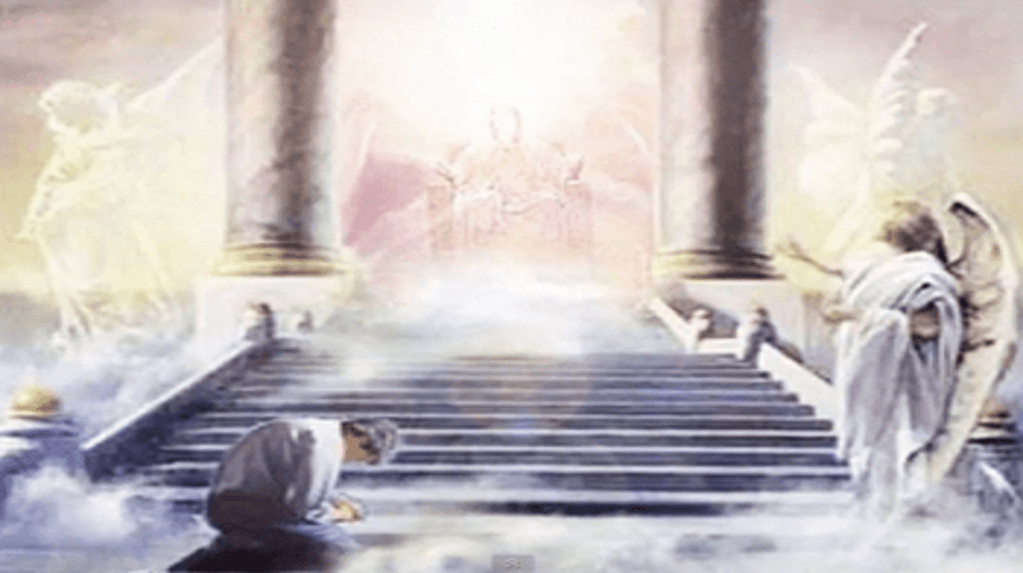
“Father, I desire that they also, whom You have given Me, be with Me where I am, so that they may see My glory which You have given Me, for You loved Me before the foundation of the world.
John 17:24
“You are . . . awaiting eagerly the revelation of our Lord Jesus Christ.”
1 Cor 1:7
Conclusion
How can this be? Will we be standing in line—waiting our turn? C.S. Lewis addressed this question when he was asked, “How can God pay attention to everyone’s prayers at the same time?” His response may cause our “heads to hit the ceiling.”
Lewis explained that when he is writing a novel, he may have a woman, sitting at a table, when she hears a knock at the door.

She gets up from the table to answer the door, but before she does, Lewis steps aside from his desk and thinks about “who should be at the door,” “what they should say to one another,” “how this meeting fits within the story line of his book.” Sometimes he thinks for hours before returning to write. In other words, as the author, he exists outside the story time of the narrative. He can take as much time as he wants before he reenters the narrative and has the woman open the door.
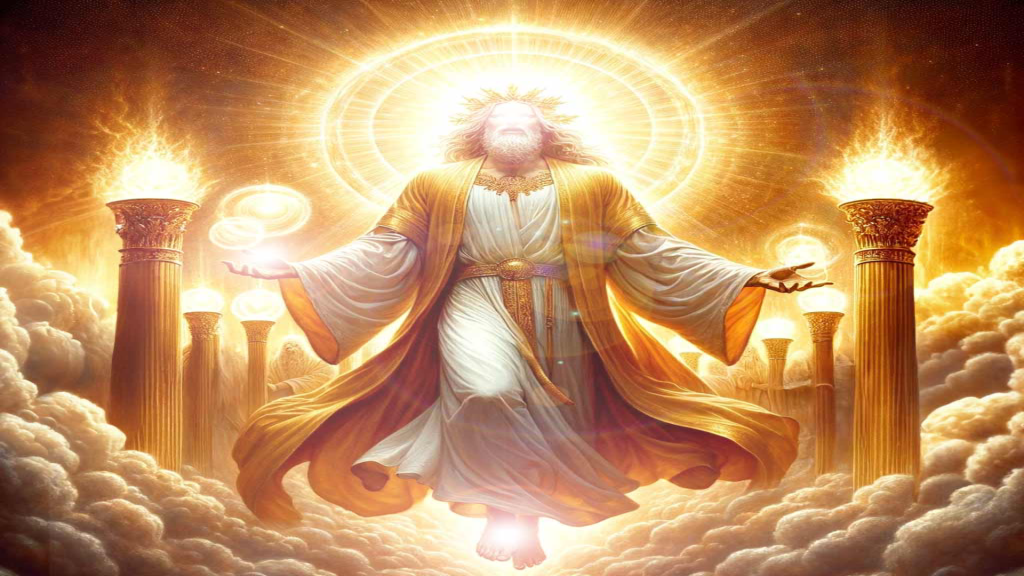
This is how it is with God. He is not bound by our understanding of time and cause-and-effect. He lives outside the narrative of our story as the transcendent One. So, He can devote Himself fully to us when we come before Him.
Jesus was not just “one of us.” He is the immanent God who is for us, but He is also the transcendent God before whom we will come.
 All Things Biblical
Leave a comment