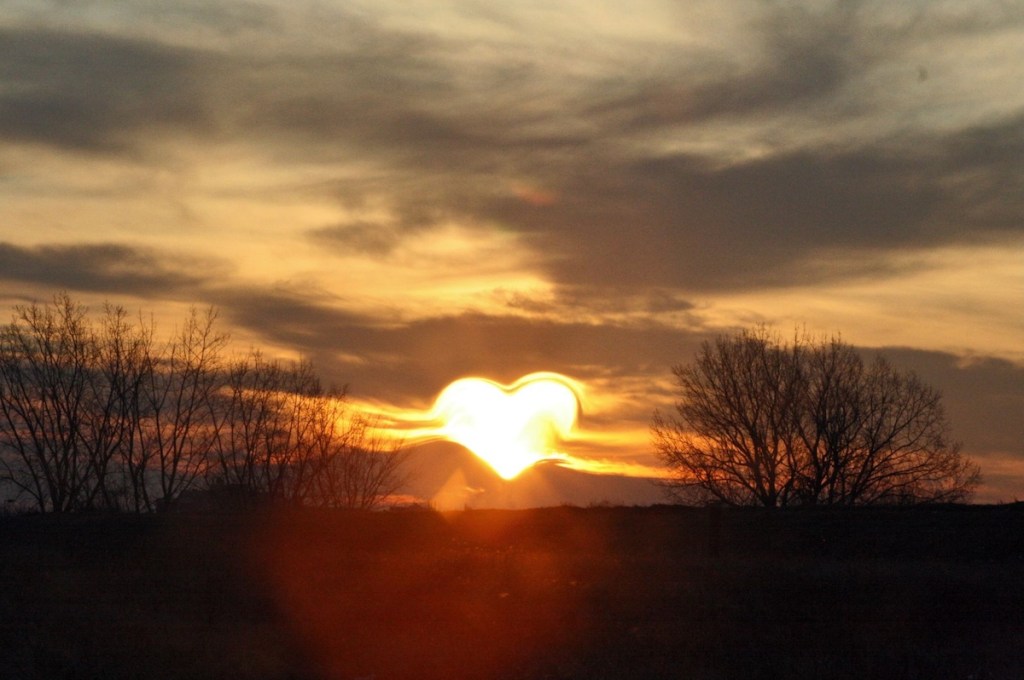
Two Ways, Two Hearts

Today, I’d like provide you an anatomy lesson on the snare drum!

I’m not going to teach you how to play a snare drum, but to know something about the snare drum so that when you begin to play it, you’ll understand how it works.
Unlike all the other drums in a drum set, this drum always has two heads—a top head and a bottom head. You almost always play with drum sticks on the top head and rarely if ever play on the bottom head. The bottom head is very thin and can be easily damaged by a drumstick.
Snare drums can come in different sizes. This is called a piccolo snare. Its body is thin and can have a higher pitch sound for orchestral and jazz music. If you hit it, it sounds like a tom-tom. What makes a snare drum unique is that it has a wire mesh that can be raised against the bottom head. When the snares are against the head, the drum has a higher pitched sound.
Something many drummers do not realize is that you want the snare drum to positioned so that the snares are running out from your body. This makes the drum more responsive if you want to play a press roll because your sticks are directly over the snares rather than to the side of the snares.
There’s more I could say, but for now, that’s the anatomy of the snare drum. Any questions? I didn’t think so.
I hope you noticed during this lesson that I haven’t really taught you about how to play a snare drum. We haven’t learned rudiments like flams or paradiddles; we haven’t learned how to play a press roll; we haven’t learned how to play rim shots. But we do know something about how the snare drum works. Right?

Well, our study today is going to be about an anatomy of wisdom and the heart. We aren’t going to learn the particulars of wisdom and the heart, but we are going to learn about how wisdom and the heart work. Before the writer of Proverbs gives us maxims of wisdom to do (like paradiddles and flams on a snare drum), he wants us to know about how wisdom and our heart operate. We are complex—much more complex than a snare drum, and the writer of Proverbs wants us to understand how we work before he gives us particular things to do. So, in this anatomy lesson, we’re going to look at the way of wisdom and the way of the heart.
He will unfold this anatomy lesson through a typical Hebrew style of “parallels” or “twos.” I like to call this “duality and balance.” It exists everywhere in our world; for instance:
- We have a sun to rule the day, and a moon to rule the night;

- The pyramids have symmetrical shape and were built in patterns;

This dock at La Jolla Beach in San Diego, California has parallel peers

- The Tower Bridge in London has two parallel towers;

- Westminster Abbey in London has parallel steeples;

- The Taj Mahal in India has parallel towers and domes;

- The Petronas Twin Towers in Malaysia have symmetry—duality and balance;

- The Sydney Opera House has parallel domes;

- The symmetry of a tree;

- Even a spider’s web has symmetry;

As humans,

- we are designed to have:
- “two feet,”
- “two legs,”
- “two arms,”
- “two hands,”
- “two ears,”
- “two nostrils,” and
- “two eyes.”
And if you look inside, our brain has two hemispheres

So too, the Hebrews thought in parallelisms. Almost every verse in the Hebrew Bible is divided into two parts. For instance, in Genesis 1:1 it states, “In the beginning God created the heavens and the earth.”
בְּרֵאשִׁ֖ית בָּרָ֣א אֱלֹהִ֑ים אֵ֥ת הַשָּׁמַ֖יִם וְאֵ֥ת הָאָֽרֶץ׃
A little diacritical marking divides the verse into two parts: “In the beginning God created” and “the heavens and the earth.”
In Hebrew poetry, like Proverbs, every verse has two parts, and the second part is indented in your Bible under the first part.
Listen, my son, and accept my words,
that the years of life may be many for you.
Sometimes both parts are saying the same thing for emphasis. Sometimes the second part says more than the first part to develop a thought as in the above verse. Sometimes, the second part says the opposite of the first part to make a point. I like to call this “thought rhyme.”
Today, we are going to look at a short passage in Proverbs 4:10-27 that capitalizes on “duality and balance” as the writer discusses “two ways” and “two hearts.” Again, he is not going to tell us how to do wisdom, but how wisdom and the heart work. He is providing us “an anatomy of wisdom and the heart” so that we can know and pay attention to how we work.
Two Ways 4:10-19
The two ways he is going to explain are the Way of Wisdom and the Way of the Wicked.
Walk in the Way of Wisdom (4:10-13)
10 Hear, my son, and accept my words,
that the years of your life may be many for you.
The first half of verse 10 begins with an admonition. As you can see, these admonitions are given in the context of a relationship—a parent to a child; I to you. We learn how to navigate life best in community, and not on our own.

I remember becoming aware of this when I was teaching in seminary. I had a pretty good idea about how the classroom worked because I had spent so much time in it as a student. But as a young teacher, I was invited to lead a study in the home of someone in Denton Texas. As I drove there with my overhead projector and transparencies in the car, I thought to myself: “I wish I had seen someone else do this at some time, so I knew what to do. It went okay, but it wasn’t the classroom I tried to bring in the back of my car.
His admonition focuses on what they both must do. It’s not enough to “hear.” The listener must “take” or “accept” the father’s words. The teacher must say the words, but it is not enough for the student to “hear” them, he must receive them.

In our neighborhood, a three-way stop was installed at the bottom of my street two years ago. I think that most, if not all, of us can hear what the stop sign is saying—bring your vehicle to a complete stop before proceeding. But I see people all the time running the stop signs at 20 to 40 mph. One person in the neighborhood said to me: “I lived here before the stop signs were installed, so I think I’m grandfathered in under the old law—I don’t need to stop at the signs!” Well, that’s exactly the risk that the father is concerned about—we hear his words, but we do not accept them or take them for ourselves. It is essential that we internalize these words so that they become part of our way of thinking.

So, in the second part of the verse, he provides us with a motivation: “and the years of your life will be many.” Remember in Fiddler on the Roof when they sang: “To life, to life, leḥayyim”? Well ḥayyim is the word that is used here for “life.” It describes physical life now, the abundant life of health, prosperity, and social esteem. An abundant life in relationship with God. There is a tree of life that gives perpetual life, so it may imply eternal life. The point is these words are important because they will affect our life!
11 I instruct you in the way of wisdom;
I lead you along straight tracks.
This instruction (torah) is not about snare drums, but about “the way of wisdom.” The use of the word “way” implies walking, a journey, a practical lifestyle. And this lifestyle is that of wisdom—having skill at life.

I own a chisel. It’s a simple tool you use to place a lock on your door, remove wood from a door frame so that the strike plate can rest flush with the wooden frame, and the door can easily open and close. The first time I used this tool, it was a disaster. It looked like a beaver had attached my door frame. I knew what the tool was and what it was supposed to do, but I had no skill in using the tool. Well, this instruction is designed to give you skill—not with a chisel, but with the way of life. New parents always joke that their first child did not come with a manual! But by the time the second or third child comes along, you’d still like a manual for the updated model, but you have a better idea about what to expect and what to do—they have become more skillful as raising children. These words are meant to give you direction in life.

Notice the instruction is described as leading “you along straight paths.” These paths are morally straight and free from torturous, deviant behavior and dangerous consequences. The plural implies that these paths are well worn. They have been created by people walking on them. We are being directed to an ancient and proved way.
12 When you walk, your step will not be hampered;
and if you run, you will not stumble.
The image is describing an unencumbered way of life. When walking (or marching ahead) our stride and pace (our conduct in life) will not be hampered, cramped, impeded, or restricted so that we can proceed vigorously, with full assurance of reaching our destination. An irregular or treacherous surface produces apprehensions and fatigue and drains away our sense of life. By following the words of wisdom, we will be free of debilitating moral obstacles that bring God’s judgment.
Then the parallelism describes us as not only walking but taking on the less secure activity of running and not stumbling.

One morning I wanted to get a long run in before the rain came. I started running the Jemison trail before daybreak. I really couldn’t see the path, and at one point I slipped, twisted my ankle, and fell. I thought, well, it’s just a stinger, I’ll be okay. But by the time I got to Crestline Village, it was clear that I couldn’t even walk anymore, and another runner had to give me a ride to my car at Brookwood Mall.
This instruction in wisdom is meant to make our life paths clear of obstacles so that our journeys are not sidetracked. In our youth, we take on life at full speed. We don’t walk, we run if at all possible. But if we do not know the path we’re traveling, we might derail our lives, our careers, our families, our children. And the effects of some of those stumbles can take a long time for recovery.
13 Hold on to instruction; do not stop;
guard it, for it is your life.
Therefore, he reminds us in several ways to hold on to instruction; do not stop; guard it (wisdom). He wants us to commit ourselves to instruction like it is an athlete’s regimen of diet, exercise, and training. The greatest discipline brings the greatest freedom. He doesn’t want us to stop or drop the ball. Why? For it is your life! The stakes are high. He has circled back to verse 10 in this statement!
Having described the anatomy of the way of wisdom, he now will describes its opposite—the way of the wicked.
Avoid the Way of the Wicked (4:14-17)
Imperatives (14-15)
In verses 14-15 the father will pile up six imperatives:
- “do not enter,”
- “do not walk,”
- “avoid,”
- “do not pass over,”
- “turn aside,” and
- “pass by.”
This multiplication of warnings may imply that evil is very seductive.
14 Do not enter the path of the wicked;
and do not take strides in the way of evil ones.
In this verse there is a progression—do not enter the path of the wicked, and do not walk in the way of evil ones.
15 Avoid it, do not travel on it;
turn aside from going upon it and pass on.
Substantiations that evil is addictive (16-17)
(by night)
16 For they are robbed of sleep till they forge evil;
and their sleep is torn away unless they make someone stumble.
They have to do evil to sleep. They become so obsessed by evil that it becomes their sedative.
(by Day)
17 For they eat the bread of wickedness;
and drink the wine of violent acts.
Evil is their nourishment while they are awake being food and drink.

Those on the path of the wicked are evilholics. Doing evil is necessary to sustain their lives by day and bring about sleep by night. I think the writer is saying that once you stray onto the pathway of evil, it completely dominates all of your life like an obsession.
I’ve tried to think about those who fall into this camp today. It seems easy to look back and point to the Nazis as an example, and they do qualify. They were losing the war, but rather than fortify their forces or negotiate their surrender, they spent all of their energy on the “Final Solution”—the animalization of the Jews.
For us—the way of evil may seem like the association with the wrong political party. And you know who the wrong political party is—anyone you disagree with. But I think it is more dangerous than that—it’s the evil we do against one another, and our obsession with it. It’s the path of hatred we allow to grow between us in our families like in the image above by William Blake of Cain and Abel. Everyone is affected by Cain’s decision. It’s the lure of infidelity that feels necessary for life but leaves devastation in its wake of betrayal and in the hearts of little ones subjected to the warfare. It’s our obsession with our identities despite our biology. I’ve known a gay husband and father who left his family for another man, and the hurt and confusion left in the wake. I’ve heard about female athletes who have been displaced in competition by transgender athletes. They used to be the fastest women in their state, and now they can’t even make the platform. And that reality has a drastic effect on their hope for college scholarships. This pathway we are lured onto, and then evil we obsess over and do to others makes the world darker for everyone.
Conclusion (4:18-19)
18 Now the path of the righteous is like the light of dawn,
That shines brighter and brighter until the full day.
19 The way of the wicked is like darkness;
They do not know what trips them up.
So, the writer concludes that the way of wisdom leads to greater and greater light, but the way of the wicked is like darkness that causes them to stumble and not know why. Clearly we want to travel the paths of our lives under increasing light, rather than in the dark, and finding ourselves tripping over something we are not even aware of. It is hard when we are in the darkness of our obsession to see life threatening obstacles right in front of.

By analogy, when I begin a neighborhood run in the dark, I stay on the roads where there are less obstacles. They’re flat and wide, and an obstacle will be more obvious. As I run light begins to seep through the trees on the eastern mountain. I have noticed for years that at one point, there is a general light, but the ground is a sepia tone—there’s no color, just a brownish black and white. But then as the sun rises, the grass turns green, and I can see different colors in the landscape. When the sun has finally risen enough that I can see, I finish my run on the one-mile loop around the lake.
Why wouldn’t we want to do the same as we travel the paths of life. You can go along the path of wisdom and gain more and more light as you travel, or you can choose the way of darkness, and stumble over who knows what and it is not possible to predict all of the consequences of the fall.
Jesus, who is the personification of Wisdom said the same thing in the Sermon on the Mount:
Therefore, everyone who hears these words of Mine and acts on them, may be compared to a wise man who built his house on the rock . . .
Everyone who hears these words of Mine and does not act on them, will be like a foolish man who built his house on the sand. The rain fell, and the floods came, and the winds blew and slammed against that house; and it fell — and great was its fall.”
Now the writer of Proverbs will move to another lesson dealing with the heart. Although this anatomy of the heart does not explicitly discuss two hearts, it implies that we can create two different kinds of hearts, and those hearts will effect our lives.
Two Hearts (4:20-27)
Keep the Interior Anatomy (4:20-22)
20 My son, pay attention to my words;
turn your ear to my sayings.
The renewed address lets us know that the topic is changing from the anatomy of “two ways” to the anatomy of “two hearts.” Whereas the earlier lesson warns us from entering the path of the wicked, this lesson will admonish us to walk straight ahead on the straight track and not swerve from it to the left or the right.
This is an anatomy because the person’s inner self is likened to body parts:
- The ear;
- The eyes;
- The heart;
- The body;
- The mouth;
- The foot.

What we do with these body parts will have an effect on our inner self. They are not just actions but formations of the heart!
20 My son, pay attention to my words;
turn your ear to my sayings.

As in 4:10, there is an emphasis on our need to receive the words being spoken. There we were to “accept them;” here we are asked to “turn our ear” toward them. It’s an image of listening.
21 Do not allow them to depart from before your eyes;
Keep them in your heart.

We are not to allow them to depart—as though they will sneak away on their own. We have to focus on them with our eyes, and to keep them in our heart.

Just as the law was kept in the ark in the center of the tabernacle, we are to keep the words of wisdom in our heart—the center of our person.

We do not have an equivalent word in English for the Hebrew word “heart.” It isn’t just our seat of emotions. Other terms related to our intestines are the focus of the emotions. The heart combines our intellect, emotion, and will. It thinks, reflects, and ponders. The heart discerns, plans, and prompts us to action. When a person lacks insight and judgment, they are said to “lack heart.” The heart can also turn away from correction and become hard. It is the center of a person’s emotional-intellectual-moral activity.
Therefore, we are to keeps these proverbs in our heart because they will form who we are from the inside out.
22 For they are life to those who find them;
and a remedy for one’s whole body.
Why? Because these words of wisdom are life for those who find them and healing to all flesh. They do not only provide us life, but they can restore life that has been lost.
The first part of verse 22 is like verse 10 which promised many years of life. But here, the description is heightened to life itself, and to the restoration of lost life.
I’ve known those who have wrestled with alcohol addiction, drug addiction, and sexual addiction, self-addiction which were alluded to above in verses 16-17. Many have submitted themselves to the Lord in their brokenness, and they have found substantial healing for their own lives and for those in their lives. The healing can take a long time. When we break another’s trust, the repair does not occur over night. Yes, there is forgiveness—not requiring another to pay for their wrongdoing. But trust is built over time—walking the right paths, being transparent, letting your partner have complete access to your computer, your phone, your private world. Healing can come after we have fallen.
Guard the Heart (4:23)
23 Above every watch, guard your heart;
for everything you do flows from it.

It is paramount that we guard the heart above everything else because everything we do flows from it. The focus of this verse may be a little different than you are used to thinking.
We are to place the heart under guard as though it were in prison. It’s ambiguous as to whether we are to guard the heart to protect it from an outside influence, or to restrain it from doing wrong. It’s probably both, but the emphasis is found in the second part of the verse—for everything you do flows from it. The sense is that the heart must be restrained from its plotting. We have to guard it from its evil intentions. The heart wants what the heart wants. Our nature is fallen—even the heart. Yes, we are the image of God, but we have been effaced. We are “glorious ruins.” So, we have to guard ourselves from ourselves.
I’d like to talk about examples from your heart . . . but thankfully, I don’t know them. So I’ll tell you about a time when I first realized the danger of my own heart. I was young—I don’t know, second or third grade. It was summer, and I remember sitting in the bathtub and plotting my heist. I was going to go to a local store—steal some magic markers, and then steal some records (45s) and put my initials on them with the stolen markers as proof they were mine. Then I did it! I had so much hubris, that after I had taken the markers and the records and put my initials on them, I then walked back into the store openly carrying the records! (They say that criminals are not so smart because they always return to the scene of the crime.) A store detective asked me about the records; I out ran him and got away. That was until the phone rang at home because someone recognized me in the store. I’m just a kid—but the heart is dangerous and must be kept under the highest of guards against its plotting.
So how do we do it? By keeping the commands within the heart as stated in verse 21b, we guard it against its evil intentions. The heart is the source of the body’s activities. Life is not only formed in the heart, but the direction life takesis formed by the heart. The heart that controls the body must be restrained from plotting evil.
Keep the Exterior Anatomy (4:24-27)
It is not enough to just restrain the heart. In this anatomy of the heart we must keep track of the body’s members through which the inner life shows itself.
The structure of these last verses is mirror like. First there are negative commands—“Keep from” in verses 24 and 27, then in between there are positive commands. And the body parts that are discussed go from general to specific–mouth to lips; eyes to eyelids. The last two verses will be dedicated to the foot emphasizing the importance of where we go / what we do.
(the mouth)
24 Keep a crooked mouth away from you;
and devious lips put far way from you.
The mouth is a direct path from the heart. As we speak, so are we. Our speech allows us to test what is going on in our heart.
As Jesus said:
“The good man out of the good treasure of his heart brings forth what is good;
and the evil man out of the evil treasure brings forth what is evil;
for his mouth speaks from that which fills his heart.”
Luke 6:45

Likewise, our speech affects the heart. Our superficial habits and talk have an effect on the mind—chatter, grumblings, flippancy, half-truths harden into well-established ways of thinking.
So, the father warns us—”keep a crooked mouth away from you and devious lips put far away from you.” The word “crooked” is used for physical defects. Therefore, the image of a crooked mouth is speech that has defects—it distorts, disfigures, dissembles, and deforms truth. “Devious” refers from departing or swerving from what is right and true. As Jordan Peterson says: “Tell the truth, or at least don’t lie.”
When we lie, people have a hard time trusting us. Why? Because lying is a tell-tale sign of our heart. If our heart is duplicitous, who knows what it will do. We certainly don’t!
“So, are you saying, Dave, that there is never a time to lie? What if you’re in Nazi occupied Amsterdam, and the Frank family is living in your attack, and an SS officer knocks at your door and asks you if you are harboring any Jews? Do I say, yes, they’re on the third floor behind the moving bookshelf?” No!
Of course, you don’t! The Nazis intend to do harm and have no right to that truth.
“But doesn’t this verse say to tell the truth?”
Yes, it does! But it is also wisdom literature, and as Bart and Gabe have both explained, as wisdom literature it is not exhaustive in its scope. It’s a maxim that is generally true—and is specifically true in terms of reflecting and influencing the heart! But that doesn’t mean that it has spoken to the ethic of truth-telling in every situation.
25 Let your eyes look straight ahead;
and let your eyelids look straight in front of you.
The eyes must be focused on the right course for the foot. He wants us to concentrate our gaze on the straight way. The eyes are always searching for new stimuli. The heart is always on the lookout for something new, and that can cause us to stumble. The wandering eye can also further corrupt the heart. Jesus said it this way:
The eye is the lamp of the body; so then if your eye is clear, your whole body will be full of light. But if your eye is bad, your whole body will be full of darkness. If then the light that is in you is darkness, how great is the darkness!
Matthew 6:22-23
Therefore, it is essential that we focus on the right way.
26 Watch the track for your foot;
and let all your ways be steadfast.
27 Do not turn to the right or to the left;
keep your foot from evil.

We are exhorted to pay attention to every step taken in the road of life, and to be firm in our commitment to this. We are then told not to deviate from the right path. We must take care not to step in the path of evil.

As you know, our going astray does not happen all at once. We drift. We cross outer boundaries before we cross inner boundaries. And we know when we are doing it. And the writer of Proverbs is not talking about finding a middle path between two extremes in our lives. For him, there is only one path for life, and we are not to swerve from it because any deviation takes us into hostile territory—evil which destroys ourselves and others
So what do these “two ways” and “two hearts” look like? How does an anatomy of wisdom and the heart show itself in real life? It may not surprise you, that it is seen in relationship.
In the book, Mortal Lessons: Notes in the Art of Surgery, Dr. Richard Selzer describes a moment when he looks on at a patient post-surgery:

I stand by the bed where a young woman lies, her face postoperative, her mouth twisted in palsy, clownish. A tiny twig of the facial nerve, the one to the muscles of her mouth, has been severed. She will be thus from now on. The surgeon had followed with religious fervor the curve of her flesh; I promise you that. Nevertheless, to remove the tumor in her cheek, I had cut the little nerve.
Her young husband is in the room. He stands on the opposite side of the bed, and together they seem to dwell in the evening lamplight, isolated from me, private. Who are they, I ask myself, he and this wry-mouth I have made, who gaze at and touch each other so generously, greedily? The young woman speaks.
“Will my mouth always be like this?” she asks.
“Yes,” I say, “it will. It is because the nerve was cut.”
She nods and is silent.
But the young man smiles. “I like it,” he says. “It is kind of cute.”
All at once I know who he is. I understand, and I lower my gaze. One is not bold in an encounter with a god.
Unmindful, he bends to kiss her crooked mouth, and I so close I can see how he twists his own lips to accommodate to hers, to show her that their kiss still works.
I remember that the gods appeared in ancient Greece as mortals, and I hold my breath and let the wonder in.”
Our Father and our God, we know that it is only through your Spirit that we can walk in the ways of wisdom. We also know that these metaphorical paths are actually:
- the ways in which we talk to each other when we leave here today,
- the thoughts we privately entertain,
- the decisions we make when are lives are in disarray, and
- the plans we make when we open our eyes in the morning.
Help us, Lord, to understand in our hearts that these are the paths of life or death, and to want to walk in the way of life—for Your sake, for the sake of others, and for our own sake we pray. In Christ’s name, amen.
 All Things Biblical
Leave a comment